Saturday, August 30, 2008

A Three Day Weekend for the Working Man


On this Labor Day weekend, finding cause to relax with a beer amongst family or friends should hardly be a daunting task. Summer – or at least the summer state of mind – may be fading, but beaches and barbecues have one last, glorious gasp left in them.


Should you need some prodding, some flicker of inspiration, know that on this very day in 1720, the English brewer Samuel Whitbread was born in the village of Cardington in Bedfordshire, England. Coming from an old family – with lineage in Bedfordshire dating back to at least 1314 according to the Bedfordshire Historical Records Society – Whitbread became a brewer’s apprentice at age 14. By the time he was 22, Whitbread ventured out on his own, partnering with Thomas Shewell to form what would eventually become the Whitbread & Co. brewery. 


Whitbread bought out his partner in 1765, and largely on the success of his brewery – which by that time was producing in excess of 64,000 barrels of beer per year, second in London only to Calvert and Company – was elected to Parliament in 1768. The brewer was the first in a line of Whitbreads (including his son, Samuel II) to represent Bedford in Parliament for more than a century – continuously for all but a brief stretch (1835-1852) from 1768-1895. 


Those with time on their hands and an interest in genealogy may be curious do decipher how it is that Whitbread’s descendants are also listed as descendants of William the Conqueror. For the rest of us, the genealogy of Whitbread’s brewery is complicated enough. While Whitbread & Co. spent the latter part of the 20th century aggressively acquiring regional breweries (including Boddington’s) and expanding brewing operations (becoming a contract-brewer for Heineken in the late ‘60s), the company also began expanding into restaurants, hotels, and other businesses. 


By 2000, with no members of the Whitbread family any longer serving on the board of directors, the company sold its brewing operations to Interbrew. Interbrew, of course, is now InBev. Soon, it appears, to be Anheuser-Busch InBev. A brewing behemoth with a massive family of beers including Beck’s and Brahma, Stella Artois and Staropramen, and countless others.


Meanwhile, that Whitbread Pale Ale sitting on the shelf of your local purveyor of fine brews? A perfectly enjoyable malty libation, though a far cry from the stouts and porters that vaulted Whitbread to early success. Not, however, in the InBev family. The name is licensed. 


Is it even British? Check the label. And enjoy on this fine weekend for a beer. See you next Tuesday.

Thursday, August 28, 2008

I Have A Beer


On this fine day for a beer, the Democratic National Convention comes to a close. Earlier this afternoon, Colorado’s own Yonder Mountain String Band took the stage at Denver’s INVESCO Field to warm up the crowd.* Later this evening, Barack Obama addresses the convention – and the nation – for the first time formally and officially as the country’s first black Presidential nominee. 


All week long, convention-goers have had the opportunity to sample the Wynkoop Brewing Company’s homage to both German tradition and the self-proclaimed candidate of “Change We Can Believe In”: The Obamanator


It is our job here neither to endorse nor oppose Barack Obama’s historic run. A fine beer is something that can and should be enjoyed across party lines. Divisions of politics, divisions of race and class and culture, can all be temporarily cast aside with a communal toast. Whether an Obama supporter or skeptic, as you reach into the refrigerator (there’s a good name for a doppelbock: Refrigerator) and retrieve that perfect brew, it’s an opportunity for reflection.


As tonight’s speakers will certainly not be shy about reminding us, it was 45 years ago today that Martin Luther King, Jr. gave his famous “I Have A Dream Speech.” This evening, in some small but historic way, that dream is realized. Some may be indifferent, some may choose to pat themselves on the back, others may feel that King’s dream remains a distant hope. Pint in hand, a better course would be to simply pause and consider where we were so many years ago.


Eight years to the day before Dr. King spoke his most famous words, 14 year old Emmett Till was murdered in Money, Mississippi – for the mere crime of speaking, though perhaps not with the utmost respect, to a white woman. It was a lynching twice commemorated in verse by that luminary of the Harlem Renaissance, Langston Hughes. Bob Dylan – himself among the performers to kick off the proceedings in the shadow of the Lincoln Memorial in 1963 – mourned Till’s murder in song.


The 1963 March on Washington came two and a half months after Medgar Evers was murdered, two and a half weeks before the bombing of Sixteenth Street Baptist Church in Birmingham, Alabama claimed the lives of four black girls, and three months before the assassination of President John F. Kennedy. The 24th Amendment, ending the poll tax, had not yet been ratified. What would become the Civil Rights Act of 1964, first introduced by President Kennedy in a televised address just hours before Evers was shot, would not become law for nearly a year. 


It was, needless to say, a different time, and a turbulent time when King ascended to the podium 45 years ago. “King delivered his address in his clearest diction and stateliest baritone,” writes Taylor Branch in his Pulitzer Prize-winning Parting The Waters (the first of a masterful three-volume biography of King).


Ovations interrupted him in the cracks of infrequent oratorical flourish, and in difficult passages small voices cried “Yes!” and “Right on!” as though grateful and proud to hear such talk. From the front, a woman could be heard to laugh and shout “Sho ‘nuff!” when King told them about the freedom checks that had bounced. Five minutes later, when King declared that the movement would not stop “as long as our bodies, heavy with the fatigue of travel, cannot gain lodging in the motels of the highways and hotels of the cities,” a shout went up from a pocket of the crowd so distant that the sound did not reach King for a second or two.


He recited his text verbatim until a short run near the end: “We will not be satisfied until justice runs down like waters and righteousness like a mighty stream.” The crowd responded to the pulsating emotion transmitted from the prophet Amos, and King could not bring himself to deliver the next line of his prepared text...Instead, extemporaneously, he urged them to return to their struggles (“Go back to Mississippi. Go back to Alabama...”), to believe that change would come “somehow” and that they could not “wallow in the valley of despair.”


There was no alternative but to preach...Later, King said only that he forgot the rest of the speech and took up the first run of oratory that “came to me.”


It’s tempting to reproduce the entire passage here – a powerful depiction of a moment both inspired and inspiring. It’s tempting, too, to suggest a particular beer – one that’s bold and strong, peerless and inspired – to parallel Dr. King and his defining speech. It would be but a trite analogy, though. The beer at hand is beer enough, as we ponder our past and plot our future. It is surely a fine day for a beer.


*If you’re still in need of warming up, Yonder Mountain String Band's  songs “River” and “Wind’s On Fire” are available as downloads on the band’s web site.

Wednesday, August 27, 2008

Where are you from?

Today is Wednesday, August 27, and as you have no doubt surmised, it’s a fine day for a beer. It is also a fine day to head to your nearest independent record store – or click your way to your favorite online retailer – to peruse the week’s newest offerings.


Released this week by Bloodshot Records is De Donde Eres, the latest from cross-cultural quartet Cordero. If the Spanish title isn’t a sufficient giveaway, the six-note horn flourish that starts the album serves as a singular proclamation of Cordero’s roots in Latin music. In fact, the entire album is sung in Spanish (a first for Cordero). Almost as quickly as those initial notes signal the Latin flavor of De Donde Eres, though, other ingredients start to establish themselves. Opener “Quique” builds to a boisterous call and response chorus, only to give way to quiet contemplation in “Guardasecretos.” The trumpet again is first to set the tone, but its real job here is to fill the empty space between singer Ani Cordero’s melancholy musings. 


Cordero (photo by Cody Ranaldo)


If you speak Spanish as fluently as we do here at the hub of beer, the precise meanings of the songs may be a mystery. But (as a peek at the English translations of the lyrics confirms) what the imagination conjures is, at its core, not so far off the mark. Cordero’s vocals are restrained. She never fully lets loose on even the liveliest tracks; nor does she fall prey to melodramatic brooding on the more somber laments. Framed throughout by sparse but expressive instrumentation, though, the apprehension in “Veneno,” the assertiveness of “La Yegua,” and the consoling tone of “La Sombra” are all apparent, even if some of the poetry is lost.


08 Ruleta rusa - Cordero

Download Cordero's "Ruleta Rusa" (Russian Roulette). It's free!


At its most celebratory, there is a sense of serenity to De Donde Eres. At its most mournful, a thread of hopefulness remains. It’s a complex emotional journey – and one that’s certainly best accompanied by a beer. Against a backdrop of both assertive, exotic Latin flair, and delicate, nuanced, sometimes elusive emotional content, the palate clamors for simplicity and clarity. Just such qualities are easily found in Cordero’s own backyard of Brooklyn, NY.


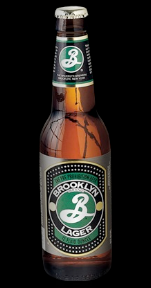
Brooklyn Brewery’s flagship Brooklyn Lager is a seductive golden delight. Its pleasantly floral hop aroma gently recedes into a subtle hop bitterness and muted but lingering sweetness. Straightforward, balanced, and thoroughly refreshing, Brooklyn Lager is just the stabilizing force to pull Cordero’s ample juxtapositions into sharp focus. 


Monday, August 25, 2008

Why is it a fine day for a beer?

August 25, 2008


Today is Monday, August 25. It is a fine day for a beer. That much is a given. Otherwise, you wouldn’t be here reading this right now.


There are reasons enough to hoist a pint today. The Russian Tsar Ivan IV – perhaps you know him as Ivan the Terrible – was born in Moscow on this day in 1530. Perhaps a Russian Imperial Stout? 


Four hundred years to the day after Ivan the Terrible entered the world, Sean Connery was born in Edinburgh. Temptation abounds to celebrate by ordering a martini – shaken, not stirred, of course. This would certainly not be clever. It would probably not be proper. Regardless, it would not be as satisfying as, say...a Russian Imperial Stout. You see the connection, of course. Sean Connery was James Bond in From Russia With Love. Oh, and it doesn’t end there. Connery played a Russian submarine captain in The Hunt For Red October. He starred in The Russia House. We’ve already established the propriety of quaffing a Russian imperial stout today, in full defiance of the summer heat. Now we have sealed the deal.


That, by way of introduction, is how this works. Beer is a state of mind. It’s A Fine Day For A Beer is that state of mind. There are dozens upon hundreds upon thousands of beer destinations on the internet. This ain’t them. It’s A Fine Day For A Beer is simply about finding the right context – or at least a new context – in which to enjoy that most fascinating and versatile of drinks.


Needless to say, this is a brand new venture. There are kinks. There will be kinks. What you see here is very much a work in progress, and a far cry from “the ultimate vision” of what it can and should be. Suggestions, complaints, and even submissions of new content are all welcome. (On the other hand, spam is not. You know where the @ goes in an email address. It’s excluded here for the sake of offering some minimal protection against spambots) Mike (at) finedayforabeer.com is your go-to email address. 


There is a convenient, and one hopes functional, RateBeer.com search bar on the side of the page. It’s not a paid advertisement. There is no formal connection between this site and RateBeer. The search bar is there for your convenience, should your interest be piqued by a beer, beer style, or brewery mentioned here. If a similar search widget for Beer Advocate can be located, it will be added as well. Either way, you’re encouraged to visit both sites – and any other beer web sites that you find useful.


There are a few less convenient, though one hopes not intrusive, blocks of Google Ads on the site. These aren’t paid advertisements, either, unless you click on them. By all means click on them! Or don’t. The main point here is disclosure. If at any point there are paid advertisements, or a homebrewer sends a few bombers (please, no bombs) of his (or her) latest brew in exchange for a shout-out, or there’s anything else contained herein that might seem like a conflict of interest, it will be disclosed. It’s A Fine Day For A Beer is here for your enjoyment, not your indoctrination.


In conclusion, then, Messrs. Bartles and Jaymes did not make the kind of beverage we support here, but we support their conclusion. That is, thank you for your support.


Sunday, August 24, 2008

The Willow Wolf


August 24, 2008


It is but a passing reference in an ancient text. The commentary is terse and wholly dismissive: "may be rather termed amusements for the botanist than articles of food," reads the best known English translation of Naturalis Historia (Natural History). It is barely a footnote in the life's work of Pliny the Elder – but for those who hold beer to be sacred, that footnote is scripture. Indeed, buried some fifty chapters into the twenty-first book of Pliny's lone surviving work is the first known allusion to and scientific classification of hops. 


A lawyer, a government bureaucrat, and a Roman military officer by day, Pliny the Elder was an avid reader* and prolific author in those idle moments when duty did not take precedence. Some would argue that he was one of the earliest environmentalists. Few would dispute that his often lyrical 37 volume Natural History was one of the earliest prototypes for the modern encyclopedia. He was a man not only of knowledge, but of wisdom. For all his wisdom, though, he was hardly a prophet. His assessment of the utility of hops – lupus salictarius (literally the "willow wolf") as he called them – has certainly been proven wrong in the nearly 2,000 years since Pliny slandered the flavorful flower.


Of course, as errors in judgment go, failure to recognize what brewers would not yet discover for centuries to come is hardly Pliny's most egregious offense. No, Pliny's most fateful error in judgment would come on this day in the year 79 AD. A rumbling which eerily coincided with the August 23 celebration Volcanalia – a feast day in honor of the Roman fire god Vulcan – had by now become a full scale eruption of Mount Vesuvius. Safely witnessing the cataclysm from across the Gulf of Naples in Misenum, Pliny chose not to stay put; he chose not to flee. Rather, at first to satisfy his curiosity, and ultimately to lead a rescue mission, Pliny decided to set sail towards the volcano.


With seas too rough for an immediate return to Misenum, rescuers and rescued alike made camp on the shores of Stabiae. It was there that Pliny the Elder met his demise. As his nephew Pliny the Younger explains in a vivid and comma-filled account of the Elder's death:


"My uncle, laying himself down upon a sail cloth, which was spread for him, called twice for some cold water, which he drank, when immediately the flames, preceded by a strong whiff of sulphur, dispersed the rest of the party, and obliged him to rise. He raised himself up with the assistance of two of his servants, and instantly fell down dead; suffocated, as I conjecture, by some gross and noxious vapour, having always had a weak throat, which was often inflamed. As soon as it was light again, which was not till the third day after this melancholy accident, his body was found entire, and without any marks of violence upon it, in the dress in which he fell, and looking more like a man asleep than dead."


Whether a martyr to science or a martyr to valor, Pliny the Elder could hardly have known that the willow wolf which he so briefly catalogued would weave its way so thoroughly into the course of history. Nonetheless, we honor Pliny the Elder on this fine day for a beer.


To simply toast Pliny the Elder with the most readily available brew would not be a disservice to Pliny's memory. To truly venerate him on this anniversary of his death, though, there is but one choice – and that choice is obvious. Russian River Brewing's elusive Pliny the Elder is an eruption of flavor, single-handedly elevating hops from mere curiosity of nature to transcendent marvel. Evoking visions of the lava spewing from Vesuvius on this very date in 79 AD, this double IPA standard-bearer fills the glass with a deep orange hue**. A thick, white head rests upon it like the ash that buried Pompeii. And, at the heart of it all, the thunderous and unmistakable notes of hops. Big, citrusy aromas. Hints of grass and pine. Alluring like the plume that piqued Pliny's interest, potent like the fumes that stole his breath – and legendary in its own right amongst hop aficionados – this 8.0% abv is not to be taken lightly. 


Treated with the proper respect, though, Pliny the Elder is generous with his wisdom. Savor that wisdom. Share that wisdom. And be assured, it's a fine day for a beer.


*More accurately, it seems, he was an avid listener. The reading was done by an attendant, while Pliny himself would take notes. "For every book he read he made extracts out of," writes Pliny the Younger of his uncle's routines. "Indeed it was a maxim of his, that 'no book was so bad but some good might be got out of it.'" This was, of course, centuries before the advent of the romance novel or the celebrity biography. Nonetheless, the advice is sage.


**Ok, not exactly. Bright, fire orange this is not. Have a tangerine if that's what you want. Or an Orange Crush. Meanwhile, if some license is being taken here in the name of simile and metaphor, it is far less than the man himself took at times in the course of his 37 volumes. Be assured that you'll find some tinge of orange glimmering in your glass should you pour yourself a Pliny.